
AI Engineer Interview Prep - QA 3

Question
Why is context important in designing prompts?
Answer
Context is crucial in prompt design because it provides the LLMs with the necessary background, constraints, and specific role it should adopt. This helps LLMs to generate a relevant and high quality output.
Without sufficient context, the LLM may misinterpret the user’s intent and rely on general knowledge. This may result in the generation of ambiguous, generic, or incorrect responses that don’t meet the user’s specific needs.
Detailed Explanation
Context is important because it tells the AI exactly what you want, how you want it, and what background information it should consider before giving you an answer.
Providing context helps guide the AI toward the correct task, response style, and level of detail. Without it, the AI is forced to make assumptions, which can lead to incorrect or incomplete outputs.
Context helps the model understand your intention
When you do not provide enough background, the AI has to guess what you want. This guessing can result in answers that miss the point or fail to meet your needs.
For example, a prompt like “Write a summary” leaves too many questions unanswered. The AI does not know whether you want a summary of a book, a movie, or a specific piece of text.
However, when you say “Write a summary of this paragraph about climate change,” the task becomes clear. The added context removes ambiguity and ensures the AI produces the correct result.
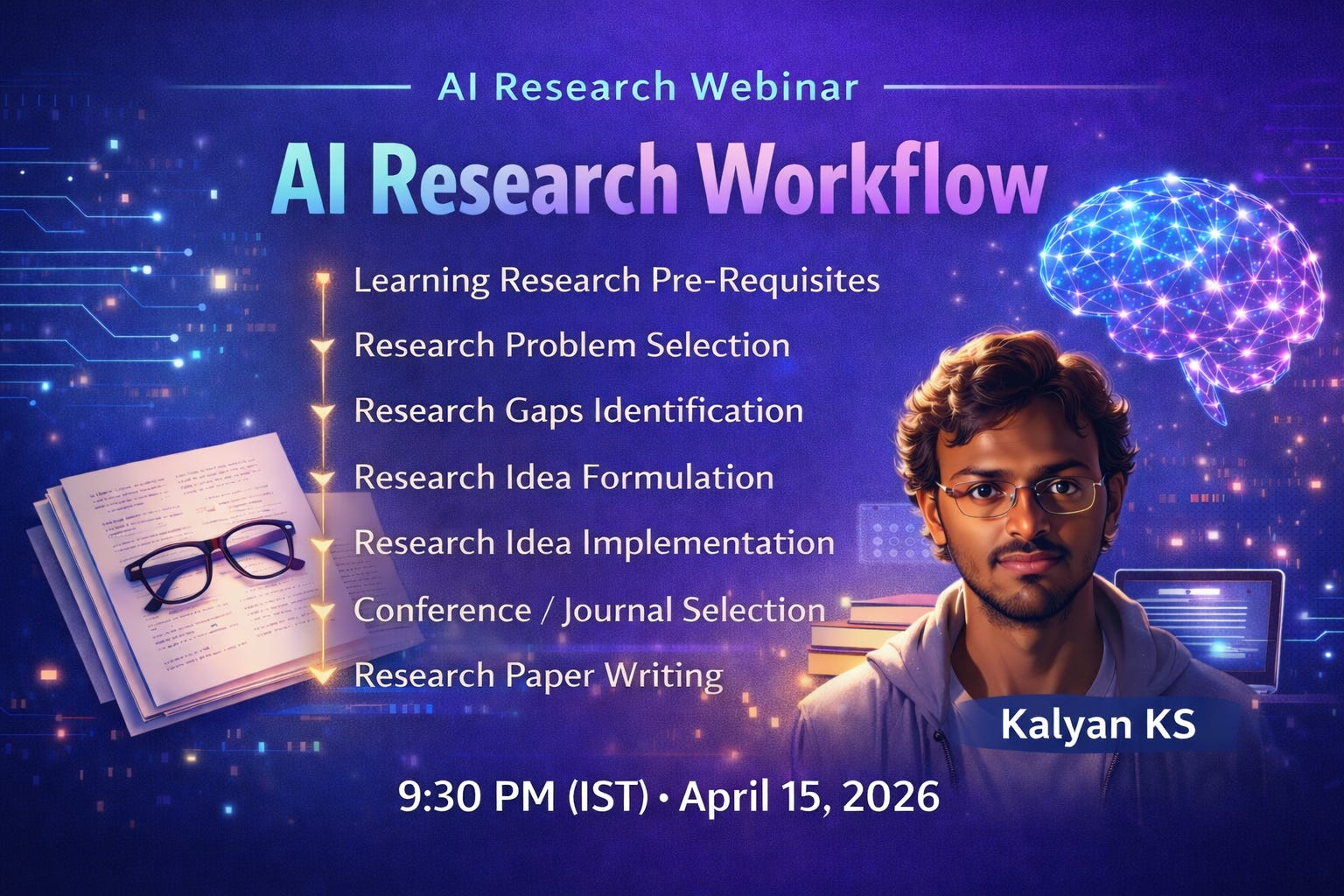
“AI Research Workflow” Webinar - Learn how to do AI Research step by step.
This webinar covers the different phases in AI Research workflow
Learning Research Pre-Requisites
Research Problem Selection
Research Gaps Identification
Research Idea Formulation
Research Idea Implementation
Conference / Journal Selection
Research Paper Writing
➡️ Register
Context helps the model produce the right style or role
Large language models can respond in many different roles such as a teacher, programmer, doctor, or storyteller.
Without context, the AI will default to a general explanation that may not suit your audience.
Consider the difference between these two prompts:
• “Explain photosynthesis.”
• “Explain photosynthesis like I am a 10-year-old student.”
In the second case, the context defines both the role and the audience. This allows the AI to adjust its tone, language, and complexity, resulting in a more appropriate and useful explanation.
Without Context, model relies on General Knowledge
When context is missing, the AI responds using only broad, general knowledge. This often results in answers that are:
• Too broad
• Not specific to your problem
• Unsuitable for your intended use