
Anthropic introduced "Agent Skills"
Equipping agents for the real world with Agent Skills

Anthropic introduced “Agent Skills”, a new way to build specialized agents using files and folders.
TLDR
Agent skills are modular folders of instructions, scripts, and resources that agents can dynamically load to specialize in certain tasks
Each skill includes a
SKILL.md(instructions + metadata) and optional scripts.Agents load only relevant skill parts to manage context efficiently.
Combines language reasoning with executable code for deterministic actions.
Skills are developed iteratively — evaluate, refine, and reuse patterns.
Use only trusted, audited skills for safety.
Already supported in Claude ecosystem; future aims include auto skill creation and MCP integration.
🎯 What are Agent Skills?
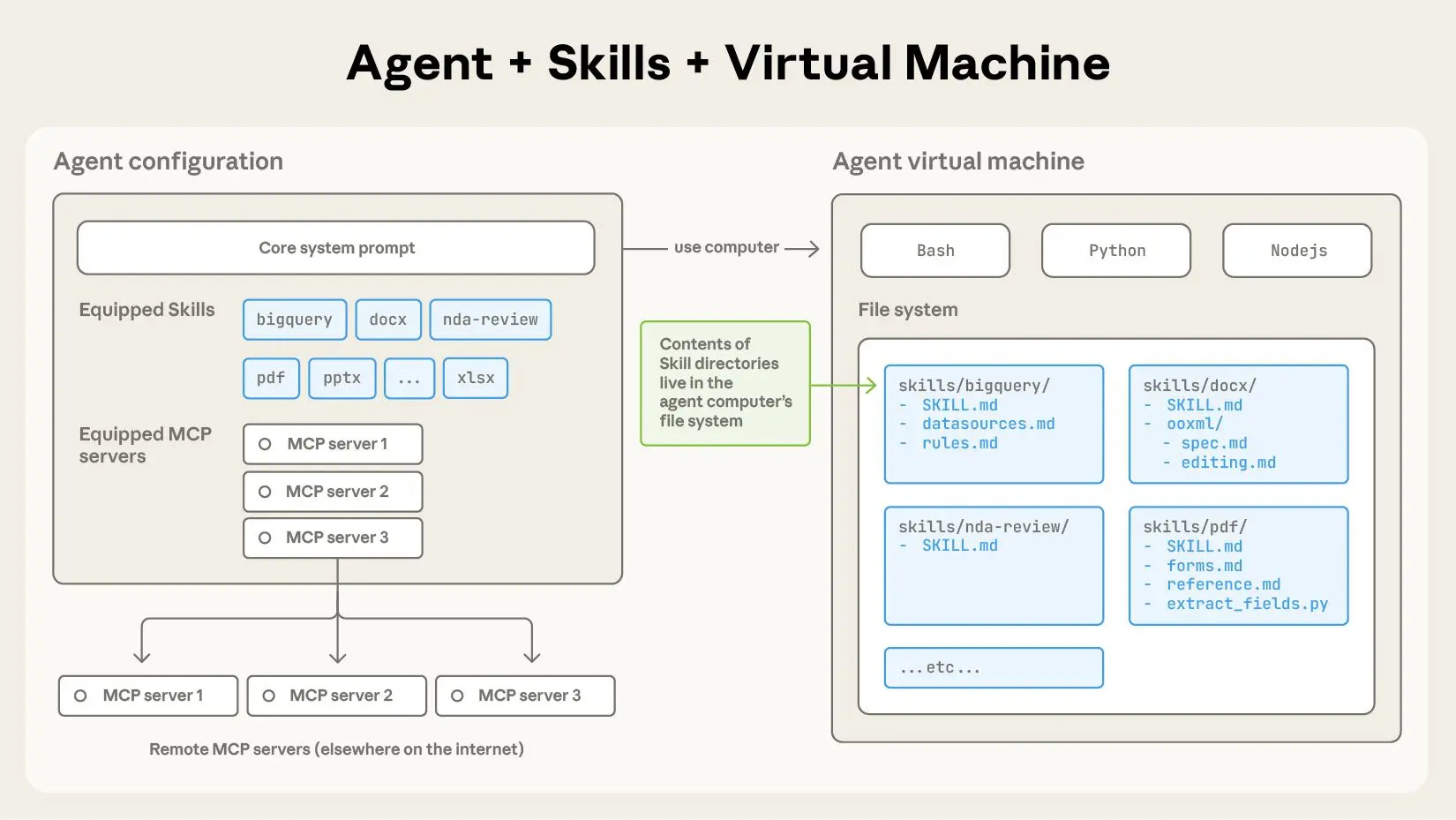
Agent Skills = modular folders of instructions, scripts, and resources that agents can dynamically load to specialize in certain tasks.
They allow a general-purpose agent (like Claude) to become specialized by injecting domain procedural knowledge without rebuilding from scratch.
Skills are composable, scalable, and portable across tasks and environments.
🧱 Anatomy of a Skill
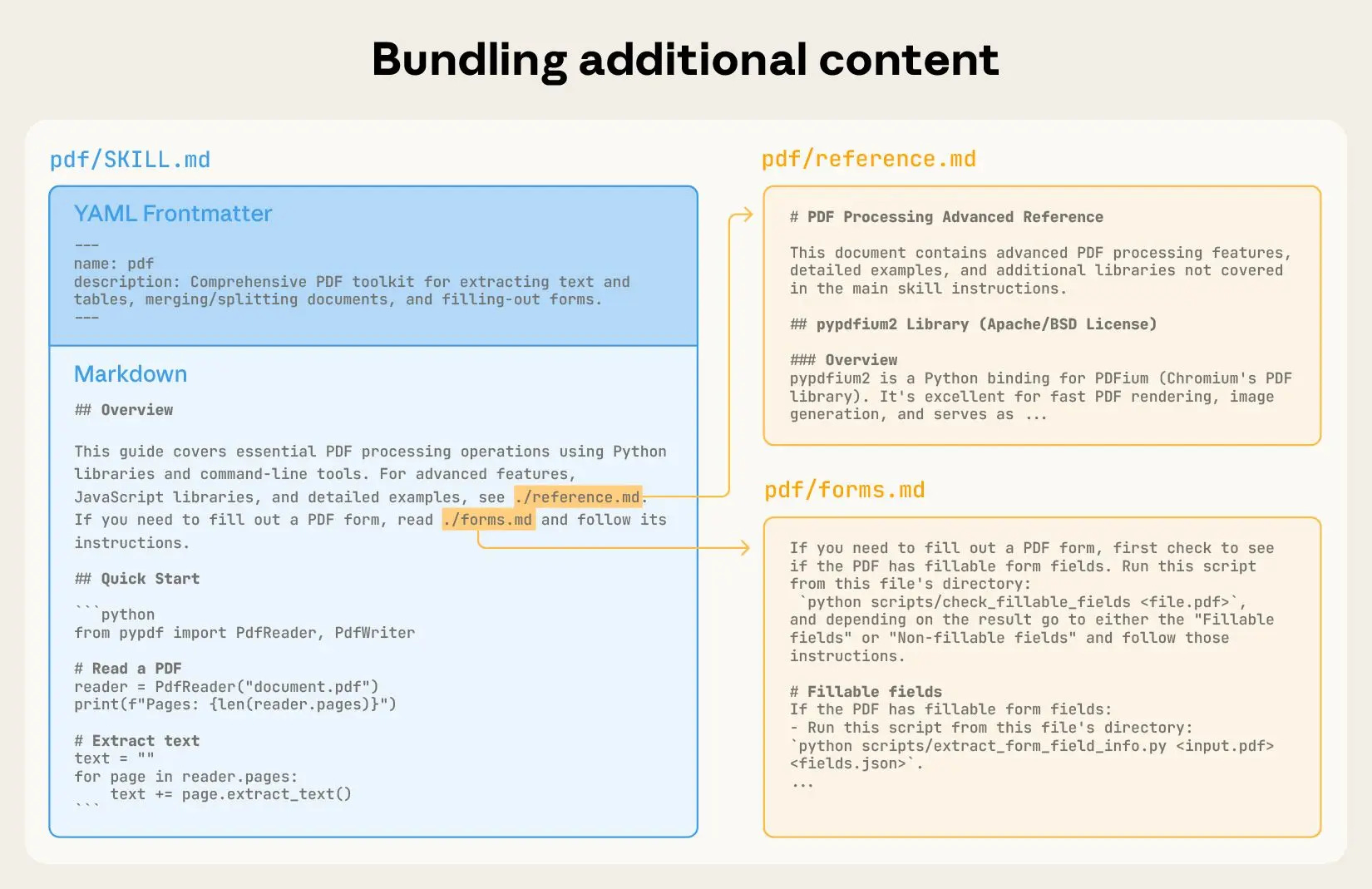
A skill is a directory containing:
SKILL.md(core instructions + metadata).Optionally, additional files (e.g.
reference.md,forms.md) that are referenced bySKILL.mdwhen needed.Optionally, code (scripts) that the agent can execute when needed.
The
SKILL.mduses YAML frontmatter for metadata (e.g. name, description) for concise discovery, loaded into the agent’s system prompt.Progressive disclosure: only load deeper context when needed (to manage context window size)
⚙️ How Skills Interact with Agent Context & Execution
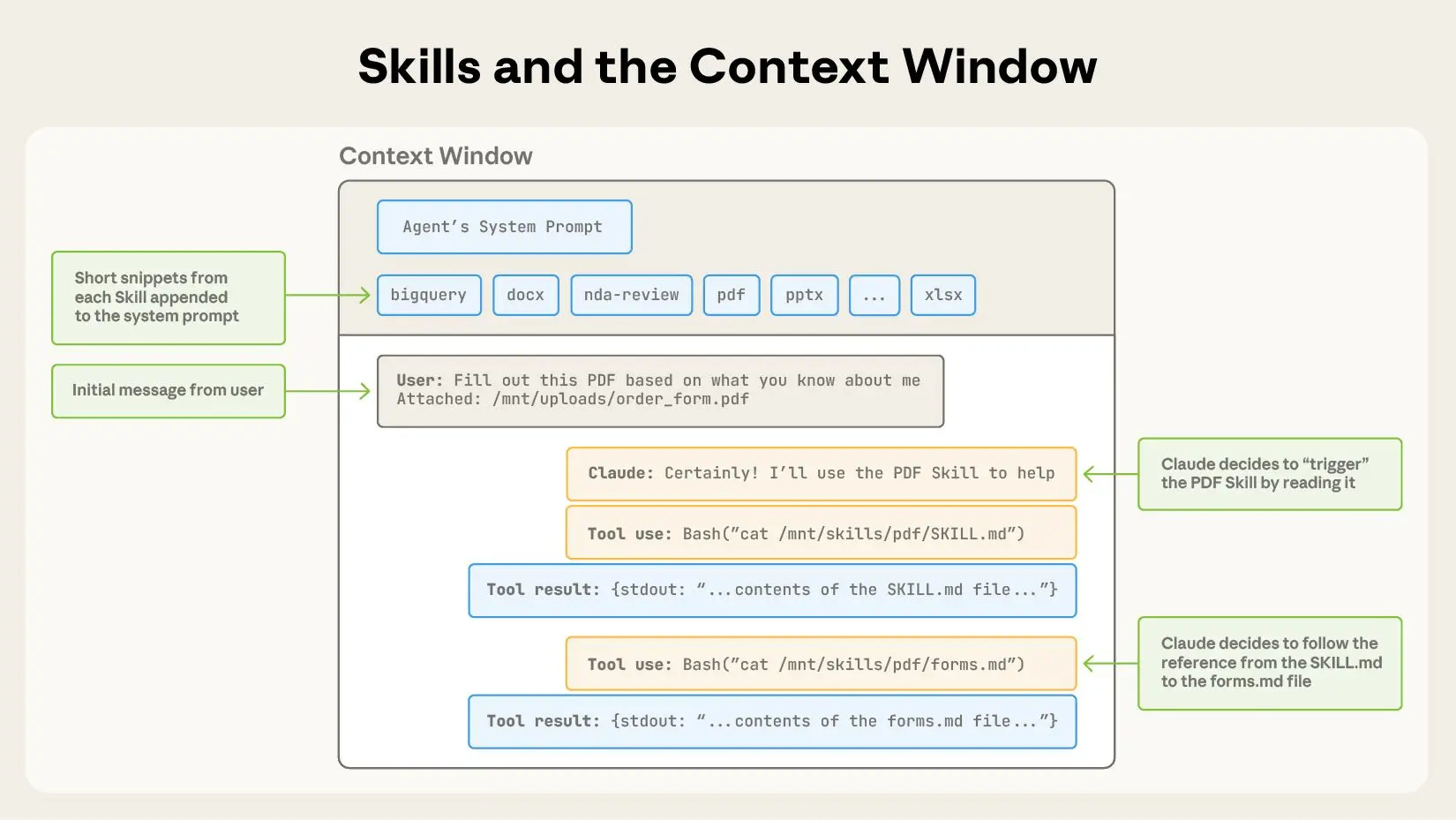
At startup: the agent sees metadata (name/description) of all installed skills, but not full content.
When a task suggests relevance: the agent triggers a skill, loads (parts of) its
SKILL.md, and possibly deeper files.Skills can include executable code (e.g. Python scripts) so the agent can perform deterministic tasks outside pure token generation.
This hybrid approach (language + code) improves efficiency, determinism, scalability.
🛠️ Developing & Evaluating Skills
Start with evaluation: find agent weaknesses via representative tasks, then build skills incrementally.
Structure for scale: split large content into separate files; isolate rarely co-used paths to save tokens.
Think from the agent’s perspective: monitor how the agent uses the skill; refine naming, description, paths.
Iterate with the agent: have it reflect on mistakes & successes, and capture reusable patterns back into the skill.
🔐 Security & Best Practices
Only use skills from trusted sources; audit code and instructions before deployment.
Inspect code dependencies and resource files for malicious behavior.
Be cautious of instructions that connect to external networks or handle sensitive data
📈 Future & Ecosystem Integration
Agent Skills are already supported in Claude, Claude Code, Claude Agent SDK, and Claude Developer Platform.
Future plans: better tooling for skill creation, editing, discovery, and sharing.
Potential integration with Model Context Protocol (MCP) servers for orchestrating more complex workflows.
Long term: agents may create, edit, and evaluate their own Skills, making them more autonomous in codifying behavior.
Reference
[1] https://www.anthropic.com/engineering/equipping-agents-for-the-real-world-with-agent-skills